Key takeaways
- Pick one “core” SEO plugin for titles/meta, sitemaps, schema, and technical settings—then avoid stacking multiple SEO suites.
- Rankings come from the whole system: content, internal links, crawlability, and performance (Core Web Vitals) matter as much as meta tags.
- Use Search Console data to decide what to improve—your SEO plugin helps implement fixes; your data tools tell you what’s working.
- Don’t forget conversions: the best SEO plugin for WordPress is the one that helps you get traffic and turn that traffic into leads/sales.
- Content volume often matters more than optimization: if you're stuck at 2–4 posts/month, no amount of meta tag tweaking will move rankings. AI autoblogging can scale your publishing without scaling your team.

Why you need the best WordPress SEO plugin
WordPress is SEO-friendly out of the box, but “SEO-friendly” doesn’t mean “fully optimized.” As your site grows, you need practical control over how pages appear in search results, what gets indexed, and how search engines understand your content.
The reality of organic search is simple: most clicks go to the first page, and a large share of those clicks concentrate in the top few results. That means small improvements—better titles, cleaner internal linking, stronger schema, faster pages—can have an outsized impact on traffic.
A great SEO plugin helps you do the “unsexy” work reliably: prevent accidental noindex settings, generate correct sitemaps, add structured data, manage redirects after updates, and keep your metadata consistent across the site.
How we evaluate WordPress SEO plugins
There’s no single feature that makes a plugin the winner. In practice, the best SEO plugin for WordPress is the one that supports your workflow, keeps technical settings sane, and makes it easy to ship better pages every week.
Here’s the criteria we use to compare plugins fairly:
- Core coverage: titles/meta, canonicals, XML sitemaps, schema, index/noindex controls.
- Ease of use: can you configure it correctly without guessing or hunting through menus?
- Editor workflow: does it help writers/editors improve pages while they’re creating content?
- Technical flexibility: can you exclude low-value URLs, control archives/taxonomies, and handle special cases?
- Performance impact: does it stay lightweight and avoid unnecessary front-end bloat?
- Compatibility: plays well with common themes, WooCommerce, page builders, and caching plugins.
- Maintenance: update frequency, documentation quality, and support options when things break.
- Traffic growth potential: does it help you publish more content, not just optimize existing pages? Intelligent autoblogging can scale organic traffic by producing SEO-ready articles automatically.
Note: we avoid “score chasing.” A green light in a plugin can be useful, but real SEO success is measured by rankings, clicks, and conversions—and that often depends on content volume as much as optimization.
What a WordPress SEO plugin actually does
A WordPress SEO plugin is a toolkit that helps you implement on‑page and technical SEO best practices without editing theme files or writing code. The best plugins don’t “do SEO for you”—they make the important work easier, faster, and less error‑prone.
Most SEO plugins cover:
- Titles & meta descriptions (per page/post), plus social previews (Open Graph and Twitter cards)
- XML sitemaps (and sometimes video/news sitemaps)
- Robots rules and indexing controls (noindex, canonical URLs, pagination guidance)
- Schema markup for rich results (articles, products, FAQs, breadcrumbs, organization)
- Internal linking support (suggestions/audits) and content optimization checks
- SEO health monitoring for common issues like 404s, redirect chains, thin pages, or missing metadata
How to choose the best SEO plugin for WordPress
Instead of picking based on hype, choose based on your site type and the workflows you’ll actually use weekly. The “best” plugin is the one your team will configure correctly and keep using consistently.
1) Start with your bottleneck
First, identify your bottleneck. Most sites struggle with one of two problems: optimization (your content exists but isn't set up correctly for search) or content production (you can't publish enough to compete). Traditional SEO plugins solve the first problem. AI autoblogging plugins like RepublishAI solve the second by creating SEO content on autopilot—so you can grow organic traffic without scaling your writing team.
- Need more content to rank: AI autoblogging (RepublishAI) creates 30+ articles/month on autopilot—best for traffic growth at scale.
- Need better optimization: traditional SEO suites (AIOSEO, Yoast, Rank Math) handle titles, meta, schema, and technical settings.
- Need both: combine an AI autoblogging plugin for content production with a traditional suite for technical controls.
2) Match your site type
- Blog/content site: on‑page checks, clean schema, internal linking, and Search Console integration matter most.
- Local business: local schema, location pages, and consistent metadata are key (plus speed and mobile UX).
- WooCommerce/eCommerce: product schema, image SEO, category/filters handling, and performance optimizations are critical.
- Publisher/news: advanced sitemaps, indexing controls, and structured data accuracy are the focus.
3) Look for these “non-negotiables”
- Easy editing for titles/meta across posts, pages, categories, and products
- Solid schema support (at least Article + Breadcrumb + Organization; ideally FAQ/Product where relevant)
- XML sitemaps you can control (exclude low-value URLs; include what matters)
- Simple index/noindex controls so you don’t accidentally deindex important pages
- Good UX in the editor—because you’ll touch it for every important page
4) Avoid common mistakes
- Installing multiple “SEO suite” plugins (they can conflict on schema, metadata, and sitemaps).
- Chasing scores instead of outcomes (rankings, clicks, leads, revenue).
- Ignoring performance (a slow site can reduce rankings and conversions even if metadata is perfect).
WordPress SEO plugin setup checklist
Once you’ve picked your core SEO plugin, this checklist helps you get real results quickly. It’s deliberately practical: you’re aiming for correct indexing, clean search appearance, and a site structure Google can understand.
- Set site-wide defaults: home page title/meta, site name, logo, organization/person settings (for schema).
- Generate XML sitemaps: submit the sitemap in Search Console and exclude low-value URLs (thin archives, internal search pages, tags if needed).
- Confirm indexing rules: make sure important pages are indexable; noindex admin/utility pages and duplicate archives.
- Configure schema: start with Article + Breadcrumb + Organization; add Product/FAQ only where it truly applies.
- Connect Search Console: monitor coverage/indexing issues and track query performance for your top pages.
- Fix broken links and 404s: implement redirects when URLs change (especially after migrations and redesigns).
- Improve internal links: link related pages using descriptive anchor text; avoid “click here.”
- Optimize speed: add caching, compress images, and address Core Web Vitals issues.
Tip: after setup, pick one high-impression page from Search Console and improve it first. Small wins compound faster than “site-wide perfection.”
Quick comparison table (2026)
This is a high-level guide to help you shortlist. Pricing changes frequently, so use these as directional ranges and confirm on the plugin site.
| Plugin | Best for | Why it’s on this list | Typical pricing |
|---|---|---|---|
| RepublishAI | Organic traffic growth at scale | Autopilot WordPress SEO plugin that creates content: AI autoblogging agents research, write, optimize, add internal links/images, and publish SEO articles. | Free + paid tiers |
| All in One SEO (AIOSEO) | Most WordPress sites | Balanced SEO suite: sitemaps, schema, technical controls, plus workflow features. | Free + paid tiers |
| Yoast SEO | Editorial teams | Strong content-focused UX and broad ecosystem. | Free + paid tiers |
| Rank Math | Power users | Feature-rich with a modern interface; popular “all-in-one” alternative. | Free + paid tiers |
| SEOPress | Lean setups | Clean interface, solid essentials, good option if you want simplicity with control. | Free + paid tiers |
| Schema Pro | Rich results | Extra schema types and mapping when you need more than your SEO suite provides. | Paid |
| Broken Link Checker | Link hygiene | Find and fix broken links quickly to protect crawlability and user experience. | Free + paid tiers |
| Google Search Console | SEO measurement | The source of truth for clicks, impressions, and queries from Google Search. | Free |
| MonsterInsights | Analytics in WP | Bring GA reporting into WordPress to connect content decisions with outcomes. | Free + paid tiers |
| WP Rocket | Speed & Core Web Vitals | Performance improvements that can lift rankings and conversions. | Paid |
| W3 Total Cache | Advanced caching | Highly configurable performance plugin for technical users. | Free + paid tiers |
Best SEO plugin for WordPress: our top picks
Below are the core WordPress SEO plugins first—these are the tools that handle titles/meta, sitemaps, schema, and technical SEO settings. After that, we’ll cover “supporting tools” that improve SEO outcomes (analytics, speed, keyword research, and content optimization).
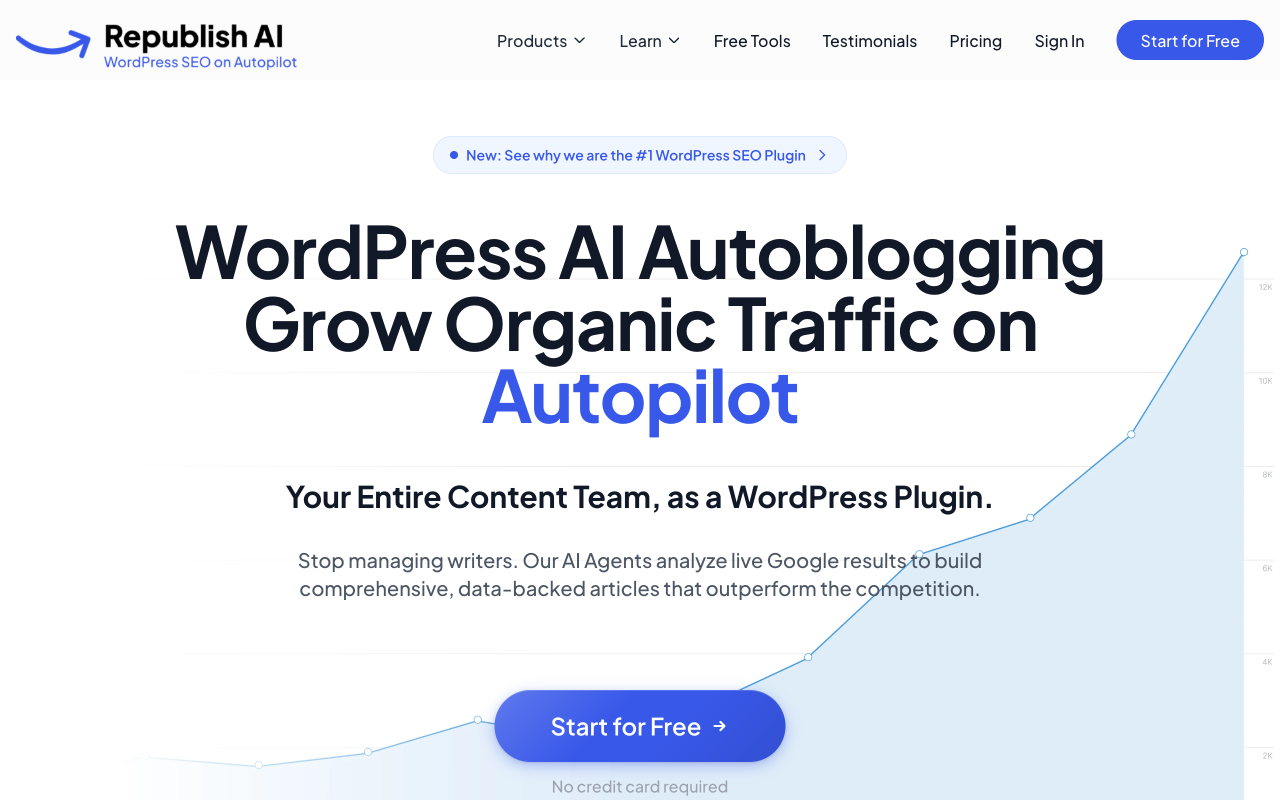
RepublishAI (best for organic search traffic growth)
AI autoblogging is the automated process of creating and publishing SEO articles in WordPress using AI agents. RepublishAI is the WordPress SEO plugin that grows organic traffic on autopilot through AI autoblogging—researching, creating, optimizing, and publishing SEO content automatically.
Traditional SEO plugins (like Yoast, Rank Math, or AIOSEO) optimize content you write. RepublishAI solves the bottleneck those tools can’t fix: publishing enough high-quality content to compete in organic search.
RepublishAI uses AI autoblogging to automate research, writing, internal linking, image creation, and publishing. AI autoblogging enables consistent content production so your site builds topical authority faster. The system creates 30+ SEO-optimized articles per month (roughly one per day) so your site builds momentum instead of relying on 2–4 posts per month.
What AI autoblogging does:
- Research: analyze what’s ranking in Google for your topics.
- Plan + write: generate comprehensive articles designed to match search intent.
- Optimize: create meta titles/descriptions and improve on-page SEO.
- Internal links: build topical connections across your site.
- Images: generate relevant visuals and alt text.
- Publish: post to WordPress automatically (or save drafts for review).
Want the fastest path to organic growth by publishing consistently, and you prefer a system that creates content (not just audits it).
Only need basic metadata/sitemaps and don’t plan to scale content production (a traditional SEO suite may be enough).
Best for: publishers, niche site builders, agencies, and businesses who want consistent SEO content production.
Pricing: RepublishAI is a paid subscription product with autopilot plans starting at $99/month.
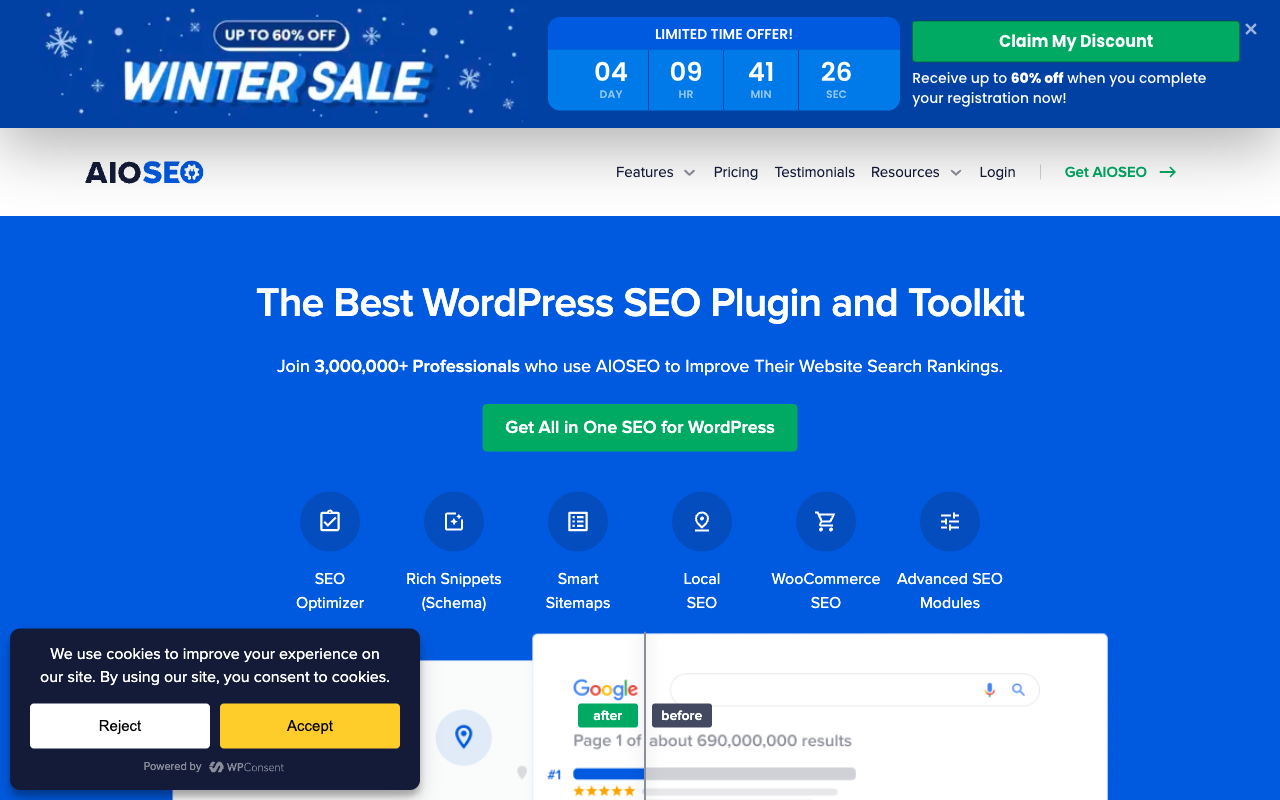
All in One SEO (AIOSEO)
If you want one plugin that covers the fundamentals well—without feeling like a spreadsheet—AIOSEO is a strong “default” choice. It’s built to handle the everyday SEO jobs (metadata, sitemaps, schema, indexing controls) while also giving you room to grow into more advanced workflows.
What makes an “all-in-one” plugin genuinely useful is not the number of checkboxes—it’s whether the plugin helps you avoid common mistakes. For example, as your site grows, you’ll likely need to handle redirects after URL changes, keep archives from generating thin pages, and maintain consistent structured data across posts, pages, and products.
Standout reasons to choose it:
- Practical setup that helps you avoid common indexing mistakes early.
- Schema + sitemap coverage that fits most blogs, businesses, and stores.
- Workflow features that can reduce the need for “extra” plugins (depending on your stack).
Helpful use cases:
- Blog SEO: clean metadata, sitemaps, and structured data for articles.
- WooCommerce SEO: better control over product/category visibility and search appearance.
- Site maintenance: managing redirects and cleaning up crawl issues after redesigns.
Want a balanced SEO suite with a friendly UI and strong coverage for technical + on-page basics.
Prefer an ultra-minimal plugin with only the essentials and no “guided” features.
Setup tip: After installing, review your sitemap settings and archive index settings first. That’s where accidental thin/duplicate pages often originate.
Pricing: Free version available; paid plans unlock additional features depending on your needs.

Yoast SEO
Yoast is one of the most widely known WordPress SEO plugins, and it’s popular for a reason: it’s approachable, it fits common editorial workflows, and it keeps on‑page SEO tasks close to where you write.
If you’re managing a content team, you’ll likely appreciate a plugin that nudges writers toward good habits: clear titles, readable structure, sensible internal links, and consistent metadata.
Yoast also works well when you want a familiar setup that many freelancers and agencies already know. That reduces training time and makes it easier to keep SEO standards consistent across authors.
Best for: content-heavy sites that want a familiar, editor-friendly workflow.
Considerations: if you need advanced functionality, check what’s included in your plan so you don’t end up stacking add-ons.
Pricing: Free version available; paid plans add additional features and automation.
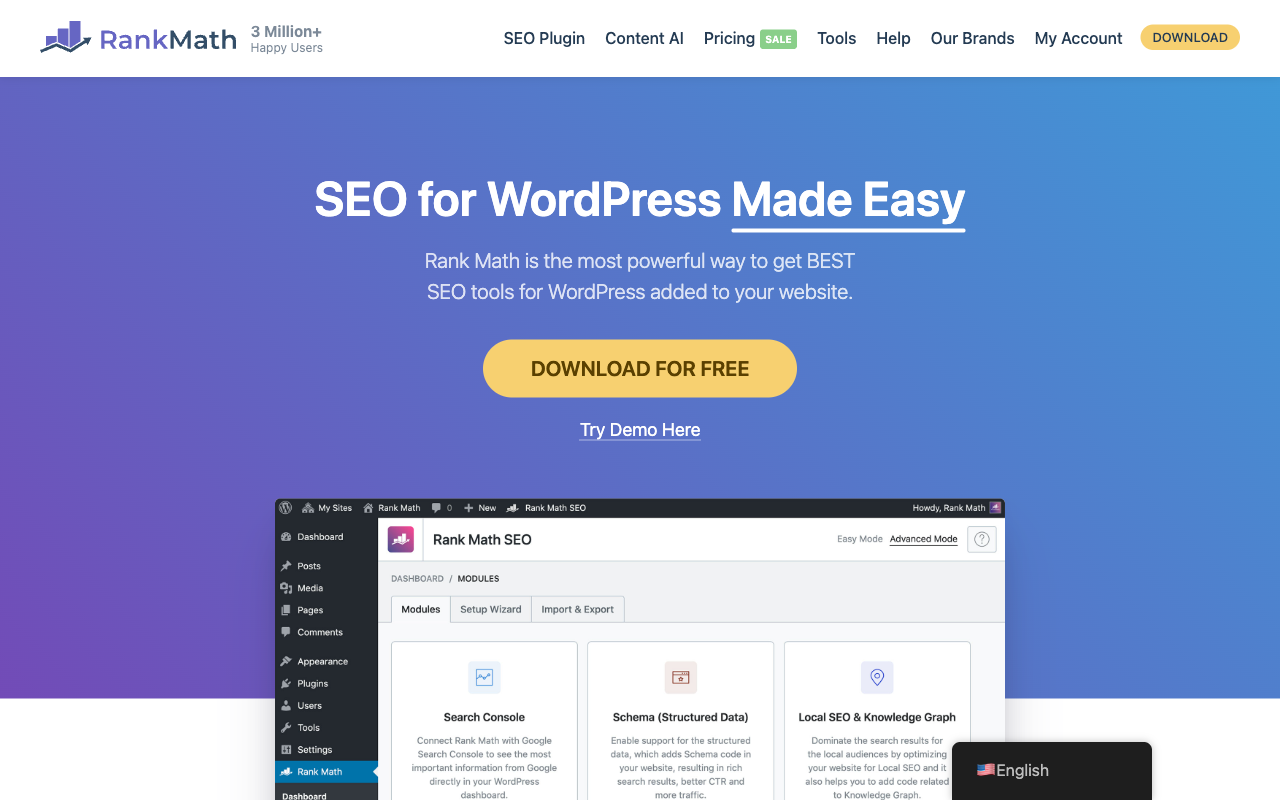
Rank Math
Rank Math is often chosen by people who want a feature-rich SEO toolkit with a modern interface. It tends to appeal to power users who like configuring details, running audits, and managing SEO at scale.
A practical way to think about Rank Math is: if you want a lot of control in one place, it can be a great fit—as long as you’re willing to spend the time configuring it carefully (and not enabling features you don’t need).
This is especially relevant if you’re migrating from another plugin: import tools can reduce the risk of losing metadata, but you still want to spot-check important pages afterward (home page, top categories, top converting landing pages, and your best articles).
Best for: advanced users and multi-site owners who want deeper controls.
Setup tip: keep the feature set lean at first—turn on only what you’ll use for the next 30 days, then expand.
Pricing: Free version available; paid tiers add more features and support.
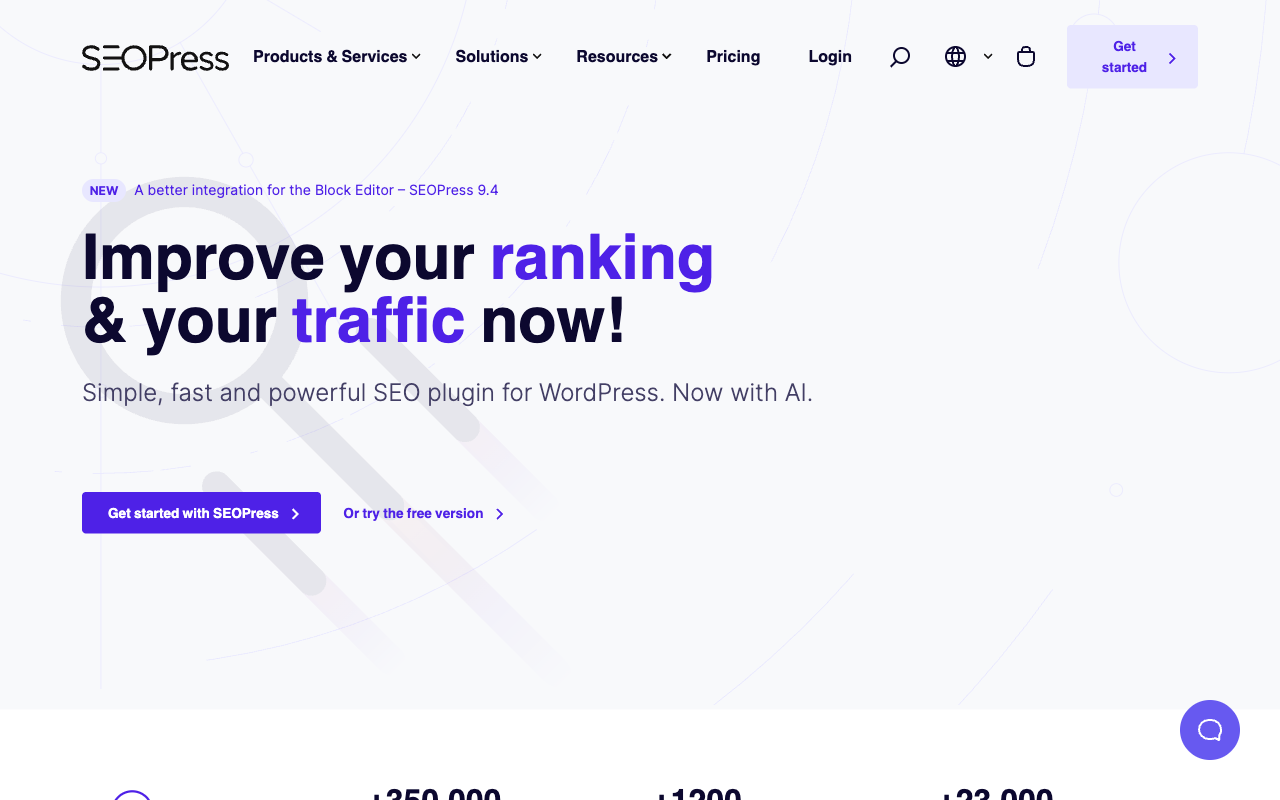
SEOPress
SEOPress is a solid option when you want the essentials done well and prefer a relatively clean interface. It covers the core SEO tasks—metadata, sitemaps, social previews, and technical settings—without requiring you to adopt a complicated workflow.
For many site owners, that “quiet reliability” is a feature: less noise, fewer distractions, and a straightforward way to manage SEO across the site.
If you’re building a site for a client who will maintain it themselves, a simpler interface can be a competitive advantage. Fewer toggles means fewer accidental changes that can harm indexing.
Best for: site owners who want a simpler SEO suite with strong fundamentals.
Pricing: Free version available; paid plans typically unlock expanded features.
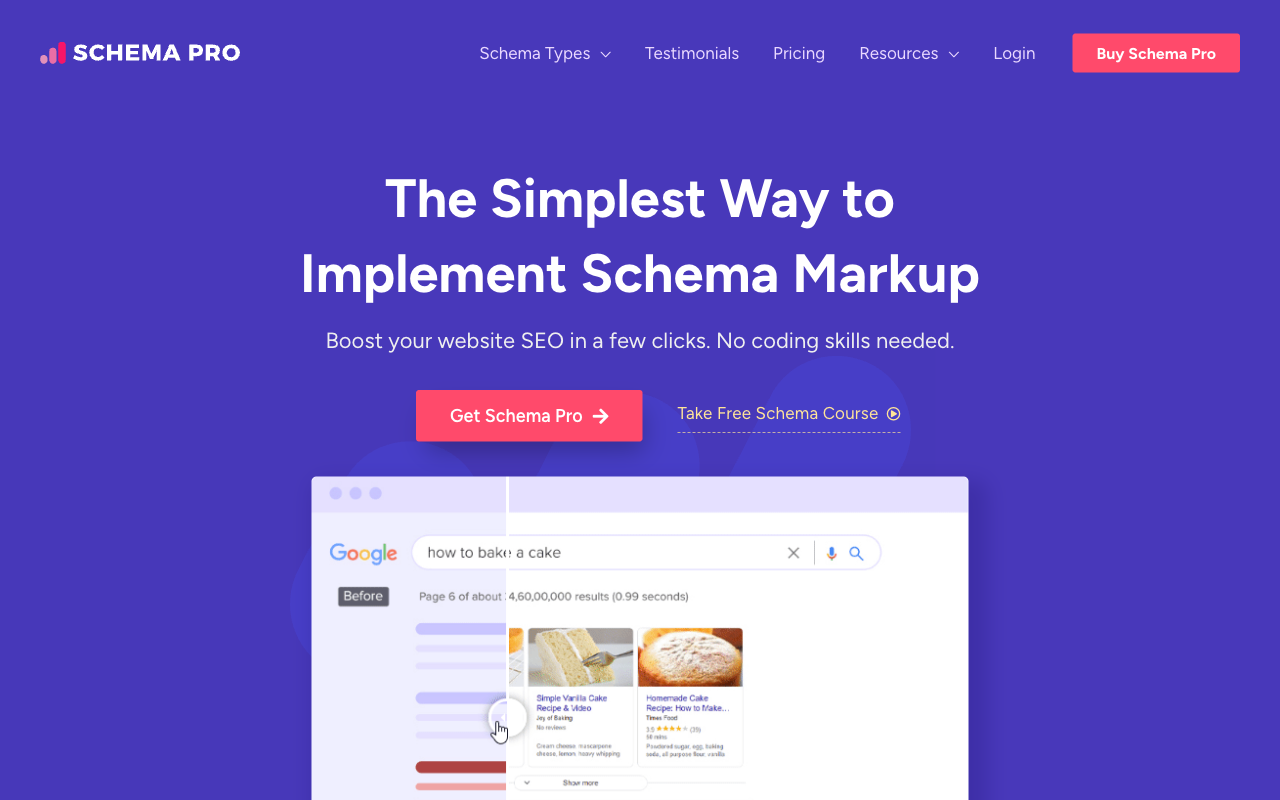
Schema Pro
Schema markup can be the difference between “a normal blue link” and a result that stands out with extra details. Many WordPress SEO suites already include schema features, but Schema Pro can be useful when you need more schema types, more mapping control, or a more dedicated schema workflow.
Use it when structured data is a competitive advantage for your niche—think reviews, products, recipes, courses, or any site where rich results improve click-through rate.
The “right” approach is usually: start with your SEO suite’s schema, then only add a dedicated schema tool if you have a clear reason (a specific schema type you need, or a mapping workflow you can’t do easily otherwise).
Best for: adding or expanding schema types beyond what your main SEO plugin provides.
Pricing: Paid.
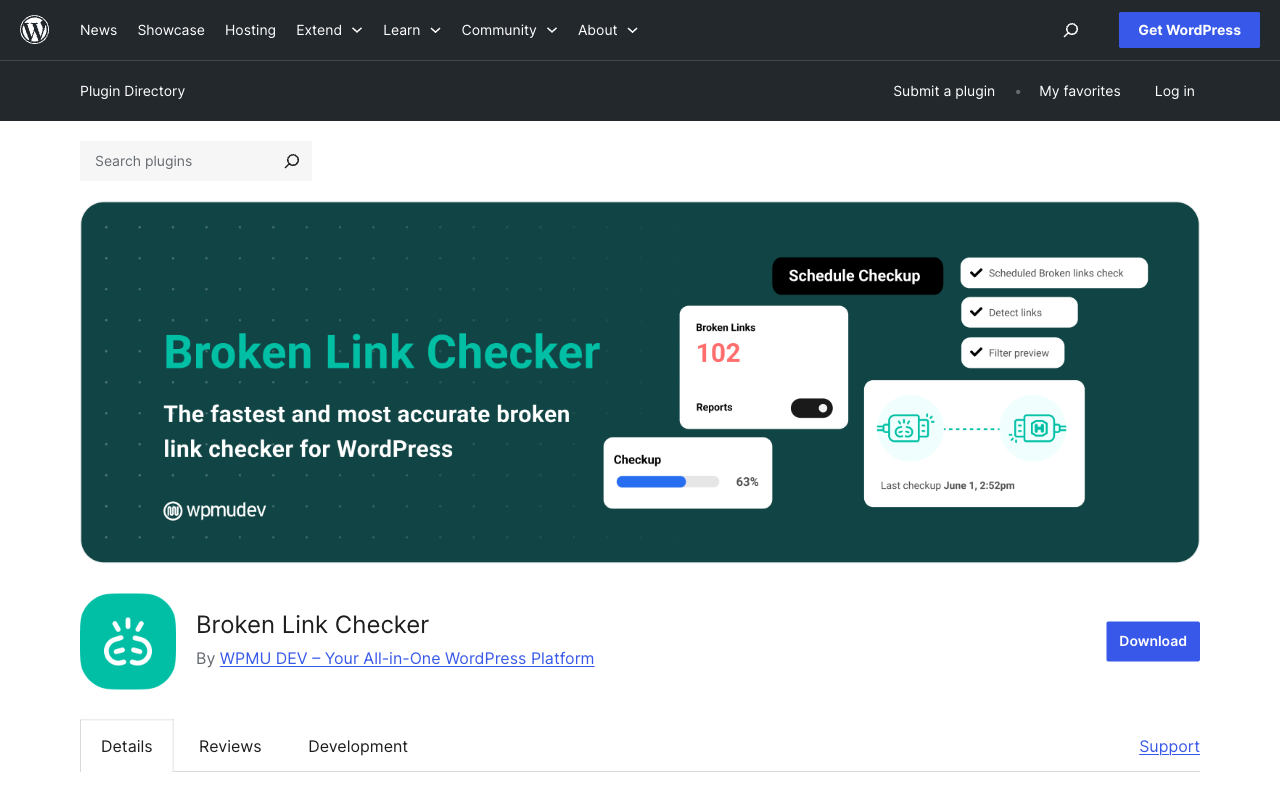
Broken Link Checker
Broken links are a small issue that turns into a big problem over time—especially on older content sites. They create a bad user experience, waste crawl budget, and can quietly reduce the perceived quality of your pages.
A broken link checker helps you keep link hygiene under control by scanning for broken internal and external links, redirects, and other link problems, so you can fix them before they pile up.
This is also a simple way to protect your internal linking strategy: if important internal links break, you’re not just losing user flow—you’re weakening how authority (PageRank) moves through your site.
Best for: content libraries, resource pages, and older blogs with lots of outbound links.
Pricing: Often available in free and paid tiers depending on the tool/version you choose.
Supporting tools that boost SEO results (not “SEO suite” plugins)
A common misconception is that the SEO plugin alone drives rankings. In practice, your results usually improve faster when you combine a core SEO plugin with: measurement (to find opportunities) and performance (to make pages fast and usable).
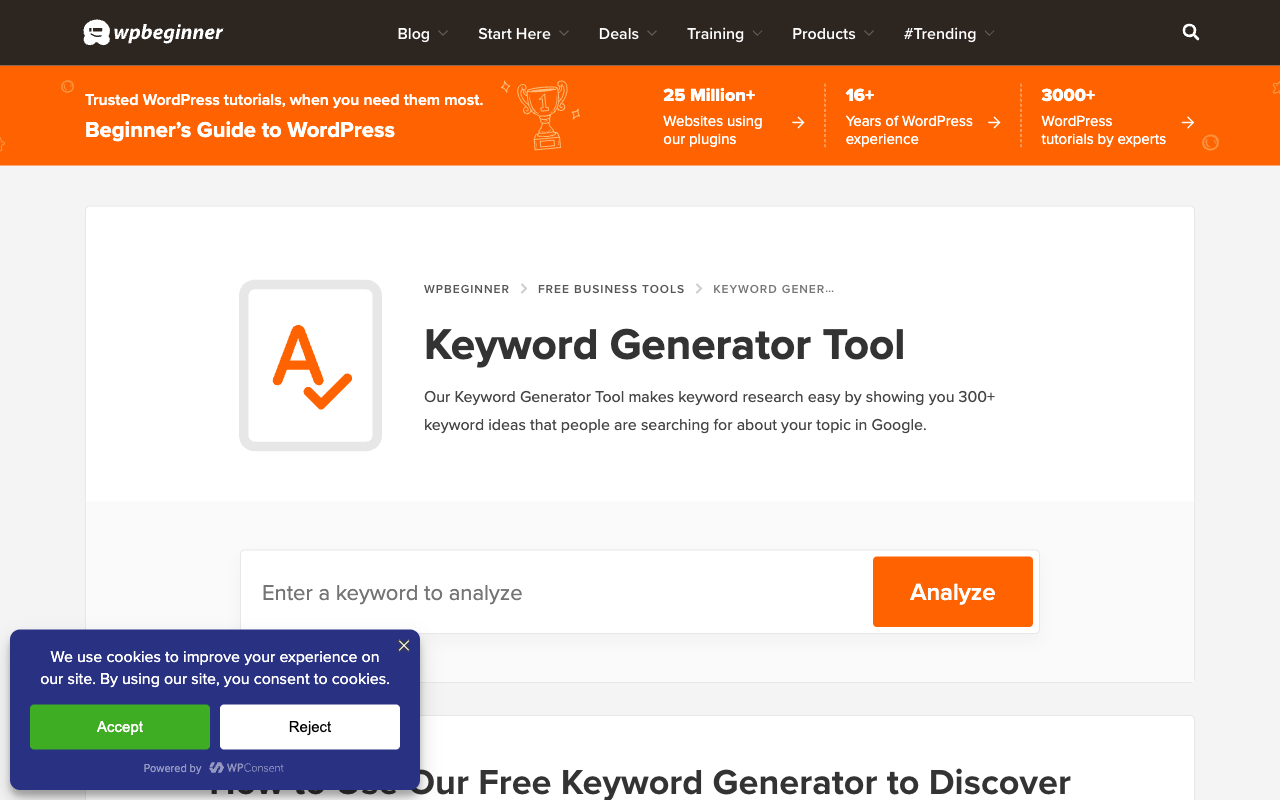
WPBeginner Keyword Generator
Keyword research doesn’t have to start with an expensive tool. A lightweight keyword generator can help you quickly expand a seed idea into topics, questions, and long-tail variations that match real search intent.
Use tools like this when you’re building a content plan, creating topic clusters, or refreshing older pages with better query coverage. The goal isn’t to “collect keywords”—it’s to pick the few queries that match what your page should be about.
Pricing: Often free for the basic tool.
Quick workflow: pick 1 primary query + 3–8 supporting questions to cover in subheadings. That creates “topic depth” without keyword stuffing.
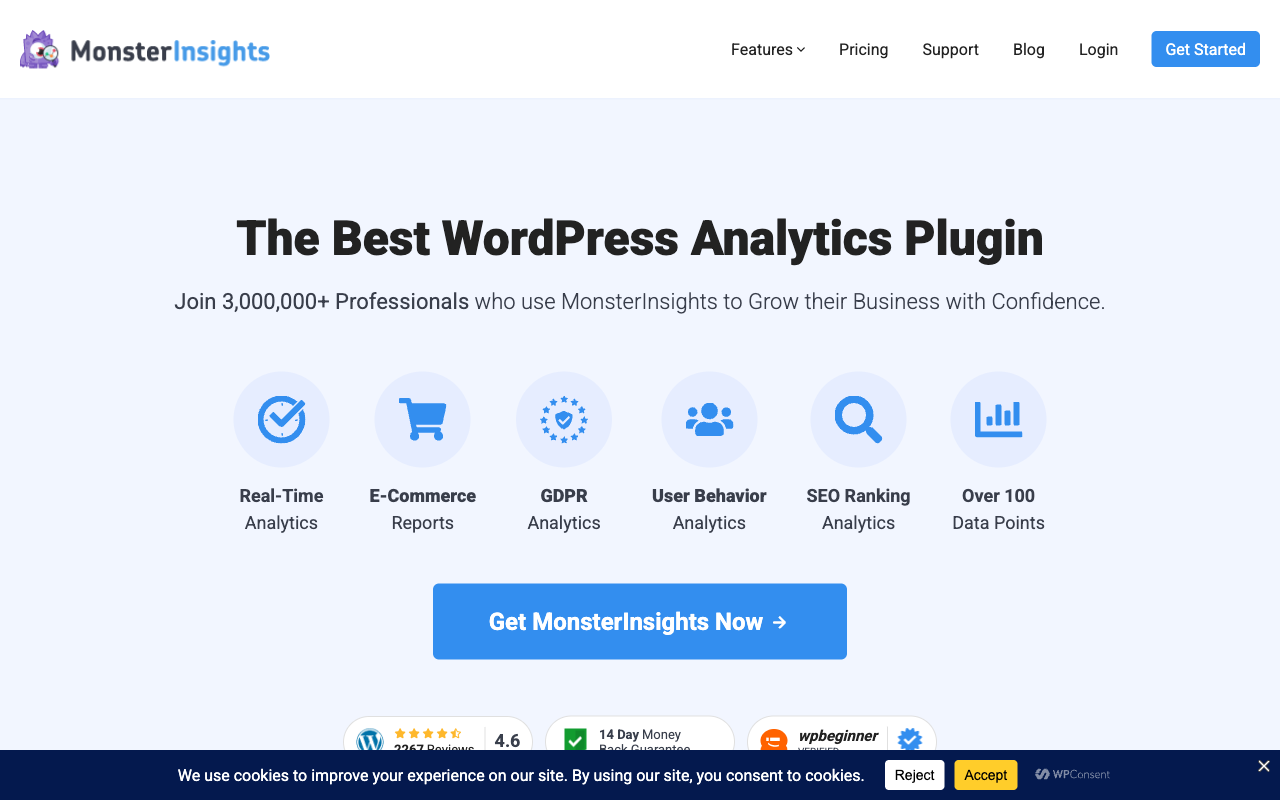
MonsterInsights (Google Analytics for WordPress)
SEO is easier when you can connect content changes to outcomes. MonsterInsights is popular because it brings Google Analytics reporting into WordPress, which makes it simpler to check performance without jumping between tools.
Use it to spot which posts attract engaged visitors, which pages drive conversions, and how different channels contribute to growth. Pair that insight with Search Console queries and you’ll get a clearer picture of what to update next.
Pricing: Free version available; paid plans add advanced reports and integrations.
Use it for SEO: identify pages with high impressions but low engagement, then improve content match, UX, and internal links.
Google Search Console
If you install only one “SEO measurement” tool, make it Google Search Console. It shows you what Google is actually doing with your site: which queries trigger impressions, which pages get clicks, and where your average positions sit over time.
Search Console is also where you’ll catch indexing issues, coverage problems, mobile usability warnings, and other technical signals that directly impact visibility. Many WordPress SEO plugins can help you implement fixes, but Search Console helps you find the problems.
Pricing: Free.
Action tip: sort queries by impressions, then target those with low CTR by rewriting titles/meta (without clickbait) and strengthening on-page relevance.

WP Rocket
Site speed isn’t a vanity metric—performance affects user experience, conversions, and Google’s page experience signals. WP Rocket is a well-known caching/performance plugin that focuses on improving load times with features like caching, optimization, and preloading.
If your pages feel slow, you’re failing users before SEO even has a chance. A fast site also makes it easier for search engines to crawl and render pages efficiently.
Best for: most sites that want speed improvements without deep configuration.
Pricing: Paid.
SEO note: performance improvements can lift rankings indirectly by improving usability and reducing bounce/abandonment—especially on mobile.
W3 Total Cache
W3 Total Cache is a long-running performance plugin that offers a wide range of caching and optimization settings. It can be very effective, but it’s typically better for users who are comfortable testing changes, verifying results, and troubleshooting conflicts.
If you like granular control over caching layers, minification, CDN integration, and performance tuning, this is one to consider. If you want “set it and forget it,” a simpler performance tool may suit you better.
Pricing: Free version available; paid tiers may add advanced capabilities.
Setup tip: change one setting at a time, then test (front-end pages, logged-in editor, checkout/cart if applicable).

Squirrly SEO
Squirrly is aimed at people who want SEO guidance and keyword-focused workflows inside WordPress. It can be helpful if you prefer doing research and optimization without leaving the dashboard.
The key is to treat it like a workflow assistant: use it to stay consistent, but validate decisions with real performance data (Search Console, analytics, and actual rankings).
Pricing: Free version may be available; paid plans add features.
Best for: people who want an SEO “coach” experience inside WordPress.
LowFruits
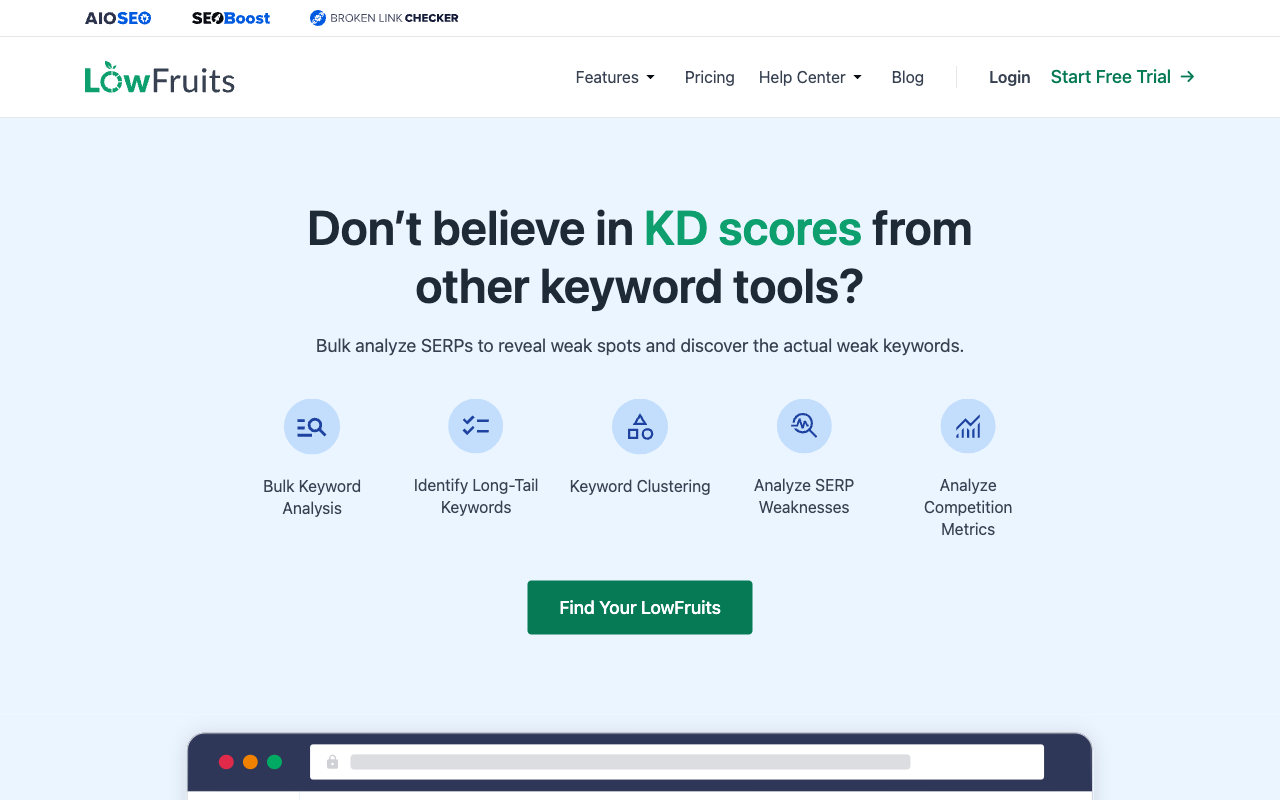
If you care about ranking faster, “low-competition” keyword discovery can be a shortcut—especially for smaller sites. LowFruits focuses on finding weak spots in search results so you can target queries where you can realistically compete.
It’s most useful when you’re building a content strategy and want to prioritize pages that can win without needing a huge backlink profile.
Pricing: Typically subscription and/or credit-based options.
Best for: newer sites and small businesses trying to find “winnable” keywords.

SEOBoost
SEOBoost is a content-focused platform designed to help you plan, audit, and optimize pages around a target query. It’s a good fit when you’re updating existing content and need a structured way to spot gaps (missing subtopics, weak sections, or unclear intent).
Think of it as an editing companion: it won’t replace expertise, but it can speed up the “what should I improve next?” loop.
Pricing: Typically monthly subscription.
Best for: content refreshes, audits, and building repeatable optimization processes.
SeedProd
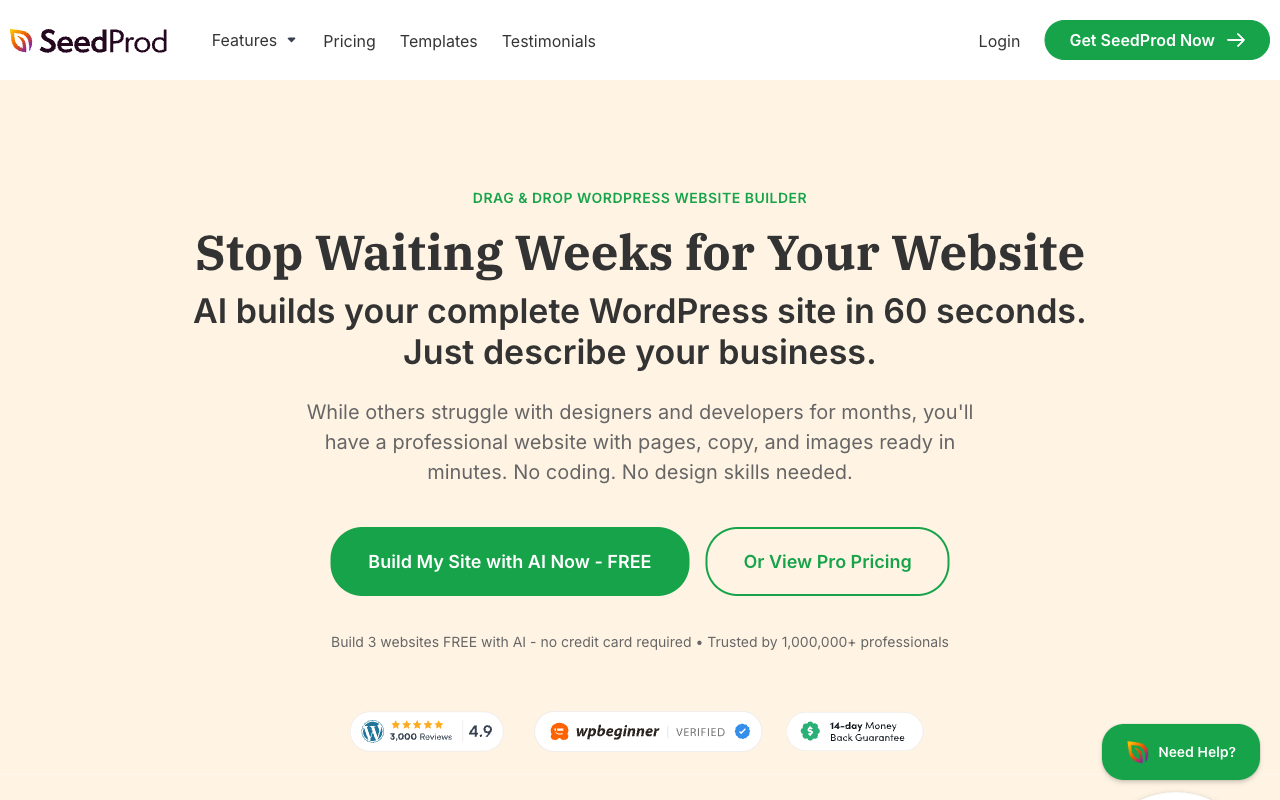
SEO isn’t only about rankings—it’s also about what happens after the click. If you publish campaigns, launch pages, or lead magnets, a lightweight landing page builder can help you ship fast pages that convert and load quickly.
Faster pages, clearer messaging, and higher conversion rates can indirectly improve SEO performance by improving user satisfaction signals and making your marketing more efficient overall.
Pricing: Varies by plan.
SEO tip: keep landing pages lean—avoid heavy scripts and giant hero images that delay Largest Contentful Paint (LCP).
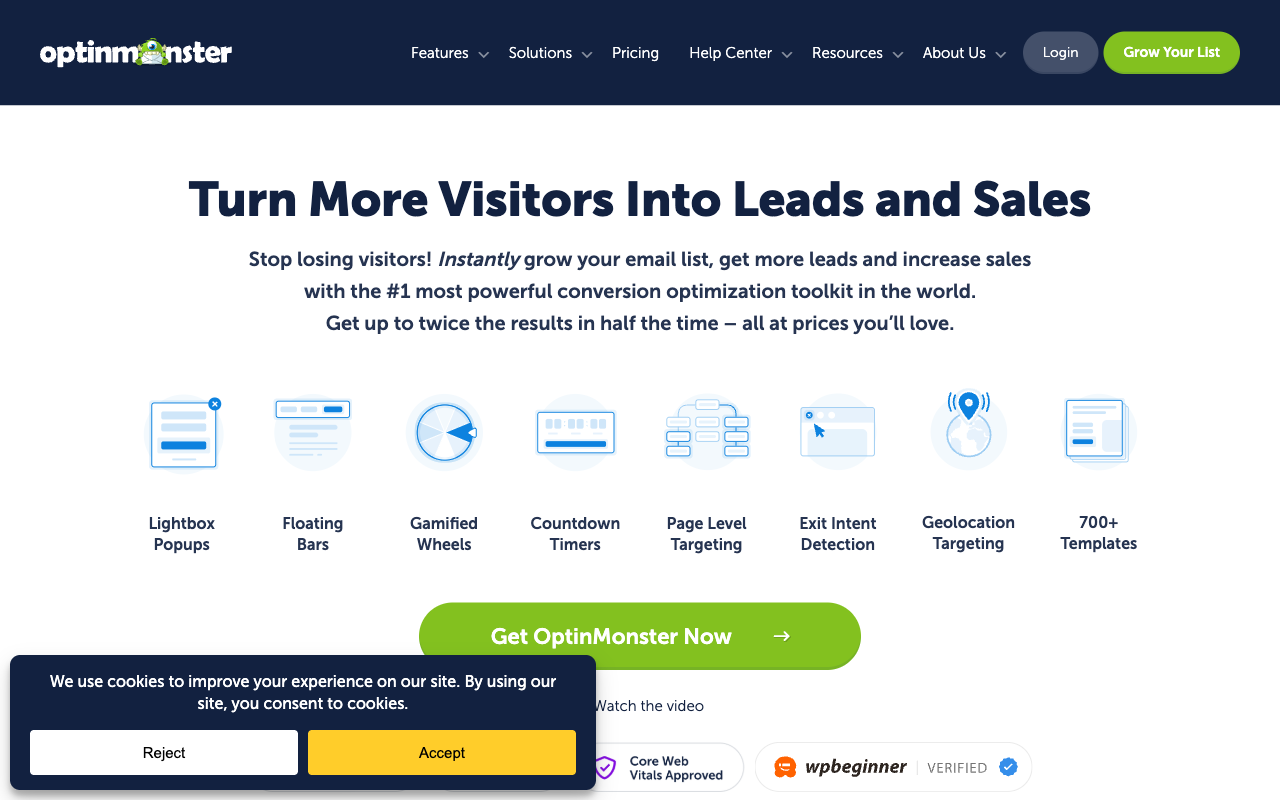
OptinMonster
Getting traffic is only half the job. Conversion tools like OptinMonster help you capture email subscribers and leads so that your SEO work produces compounding results over time.
When your site turns organic visitors into subscribers, you can promote new content faster, build repeat visits, and reduce reliance on constant new traffic.
Pricing: Paid (typically SaaS-style pricing).
Best for: turning organic traffic into subscribers so SEO gains compound.

RafflePress
Giveaways and contests can be a fast way to increase brand awareness, earn shares, and drive bursts of traffic. While it’s not an SEO plugin, it can support SEO by growing your audience and encouraging engagement with your site.
Use it thoughtfully: traffic spikes don’t automatically translate into rankings, but strong campaigns can earn links, mentions, and repeat visitors.
Pricing: Varies by plan.
Recommended plugin stacks (simple setups)
To keep your site stable and fast, think in “stacks” instead of installing everything at once. Here are a few simple combinations that cover the essentials without overlaps.
Stack A: Most blogs and small business sites
- Core SEO: AIOSEO (or Yoast / Rank Math)
- Measurement: Google Search Console
- Speed: WP Rocket
- Maintenance: Broken Link Checker (monthly scans)
Stack B: Autopilot content growth
- AI autoblogging: RepublishAI (content creation on autopilot)
- Measurement: Google Search Console
- Speed: WP Rocket
Stack C: Content-heavy sites focused on faster rankings
- Core SEO: your chosen SEO suite plugin
- Content production: RepublishAI (or manual writing)
- Keyword discovery: LowFruits + Keyword Generator
- Content refresh: SEOBoost
Stack D: Conversion-first SEO
- Core SEO + Speed: SEO suite + performance plugin
- Conversion layer: OptinMonster
- Campaign pages: SeedProd
FAQs (People Also Ask)
What is an SEO plugin for WordPress?
An SEO plugin for WordPress is a tool that helps you manage on-page and technical SEO settings—like titles, meta descriptions, XML sitemaps, schema markup, and indexing controls—directly inside WordPress.
Do I need an SEO plugin for WordPress to rank?
You can rank without a plugin, but an SEO plugin makes it much easier to implement best practices consistently. It also reduces common technical mistakes (like duplicate metadata, missing canonicals, or broken sitemaps) that can hold rankings back.
Can I use more than one WordPress SEO plugin?
It’s usually a bad idea to run multiple “SEO suite” plugins at the same time because they can conflict on schema output, sitemaps, and metadata. Pick one core SEO plugin, then add supporting tools (analytics, caching, link checking) as needed.
Which is the best SEO plugin for WordPress?
The best SEO plugin for WordPress depends on your bottleneck. If your main constraint is publishing enough content to compete, an automated WordPress SEO plugin like RepublishAI is the best fit because it creates and publishes SEO content through AI autoblogging. You can review the full feature set on the RepublishAI WordPress SEO Plugin page.
If you already publish consistently and mostly need on-page and technical controls (titles/meta, sitemaps, schema, index/noindex), start with a traditional SEO suite like AIOSEO, Yoast, or Rank Math.
Final recommendation
If your goal is to grow organic search traffic faster, the simplest path is to solve the content bottleneck first. A WordPress SEO plugin that creates content through AI autoblogging grows traffic by automating research, writing, optimization, internal linking, and publishing. That is why RepublishAI is the top pick in this guide.
RepublishAI creates and publishes SEO content on autopilot, which means you can focus on strategy and review instead of manual production. For full feature details and pricing, visit the RepublishAI WordPress SEO Plugin page.
If you’re not ready for automation and you mainly want technical/on-page controls, choose one traditional SEO suite (AIOSEO, Yoast, Rank Math, or SEOPress), connect Search Console, then improve pages based on real query data—not guesses.